Las Villas of Plattekill
Expand the drop down menus to read each chapter.
iBienvenidos a Las Villas! Welcome to Las Villas!
Las Villas of Plattekill, New York, was a collection of primarily Puerto Rican owned resorts that flourished in the Hudson River Valley during the mid-to-late 20th century. These vacation destinations served as a retreat for Puerto Rican families seeking an escape from the fast pace of New York City, offering a taste of home in a rural setting.
La introducción... Introduction

sign that stood at the intersection of
Route 32 and Plattekill Ardonia Road.
Courtesy of Nora Hammond Gallardo
The origins of Las Villas can be traced to the early 1900s, when European Spanish immigrants began migrating to the United States. Over time, many of these immigrants moved beyond the urban centers in search of new opportunities and a place to call home. As they settled North of New York City, they established boarding houses and resorts which became known as “villas.” In addition to Spanish immigrants, some Cuban immigrants also owned and operated villas, adding to the diverse Latino presence in the Hudson River Valley region that also included resorts catering to Jewish, Irish, Italian, and African American communities.
The surge in Puerto Rican migration to New York was driven by economic hardship on the island and the promise of labor opportunities on the mainland. Many Puerto Rican families initially settled in urban centers such as New York City and Newark, New Jersey, but the fast-paced and crowded environment led some to seek a culturally familiar retreat. Las Villas provided just that; A space where Spanish was spoken, traditional music filled the air, and authentic Spanish and Puerto Rican cuisine was enjoyed, fostering a sense of home away from home.
By the 1940s, property ownership in these communities had begun shifting to a predominantly Puerto Rican population, often through business transactions or family ties. Many of the original villa owners, Spanish immigrants and individuals from other ethnic backgrounds, sold their businesses to Puerto Rican families, some of whom had been customers at the existing Spanish villas. Some families started from scratch and purchased farms that were on the market from local Plattekill residents. Starting as farmers, Puerto Ricans often expanded into a multi-use land business, developing a villa on the same property. Owners, living in a separate house on the same property, were able to cater to guests by providing housing and entertainment, while serving meals made with ingredients harvested directly from their own backyard. In a few cases, Puerto Ricans married into Spanish families that already had begun operating a villa, and over time, ownership transitioned through family connections. This shift not only reflected the changing demographics of the area but also the multigenerational aspect of Las Villas. Many of the children of the new property owners were second-generation Puerto Ricans, living between the cultures of Puerto Rico and urban metropolitan cities in the northeast. Their parents had their lives rooted in Puerto Rico, holding onto traditional values, while raising their children who grew up without any personal connection to the island and an urbanized cultural identity. Through generational evolution, the identity of the community of villas that marketed to other Hispanic communities from urban cities was shaped.
Las Villas was established by Spanish entrepreneurs who saw an opportunity to create a vacation space tailored to their community. Unlike mainstream resorts that often excluded or were unwelcoming to Latinos, these vacation spots provided a culturally rich experience for Puerto Rican families. Some of the resorts were converted from old farmhouses, boarding houses, or summer camps that evolved into lively gathering places filled with music, dance, and food reminiscent of the island. Each villa had its own unique atmosphere. Some resorts offered a full range of recreational activities such as swimming pools, live music, and even baseball fields, while others were simpler, offering quiet retreats with beautiful natural surroundings. Many families returned year after year, forming lifelong friendships and reinforcing a strong sense of cultural pride. It was an oasis for many that could have been preservable if not for societal changes happening at the time.
All of the original villas eventually closed due to shifts in the supply and demand dynamic. On the supply side, many of the original villa owners were aging and could no longer maintain the business. Recognizing the direction in which the villa business was headed, many of the next generation prioritized pursuing their own path outside of the community, rather than taking over the operation. Even for those who wanted to carry on the legacy, it became nearly impossible. Despite being filled to capacity during the peak season, the profit generated by the villas was often just enough to break even. During the off-season, many Puerto Rican families had to seek other jobs to support themselves. Another factor was the change in customer patterns. On the demand side, economic changes meant that customers now had more appealing and convenient vacation options, by air travel, like Florida or even back to Puerto Rico, reducing the need for local vacation spots like Las Villas.
Although these businesses closed down, their legacy remains an important chapter in Plattekill’s history. While the visibility of Latino culture through Las Villas has faded, the Hispanic community still exists in the area. They continue to make their mark adding to the history of Puerto Rican migration in the United States.
Elisabet Guerrero-Hernandez, Marist '25
Vida en comunidad... Community Life

The Puerto Rican community of Las Villas in Plattekill, New York, represented a unique blend of migration, memory, and multigenerational identity.
The emergence of Las Villas can be traced to Puerto Rican migration patterns. Economic hardship and political instability on the island pushed many to seek opportunities in New York City. However, as families searched for affordable and community-oriented escapes from city life, Plattekill became a haven. Many were drawn to the rural beauty and tranquility of the area; it reminded many of Puerto Rico, making it feel both new and familiar. If they couldn’t create the life they wanted for themselves and their families in the city, they could do so in Plattekill.
Strong family and social bonds defined the community. Las Villas became a place where urban relationships were transported and re-rooted in the Hudson River Valley. Their patrons were mostly of Hispanic heritage, Spanish, Puerto Rican, Mexican, Colombian, Venezuelan, Argentinian, Dominican, and others who wanted a cultural space to relax and reconnect.
Cultural life in Las Villas was vibrant, characterized by music, dance, cuisine, and recreational activities that fostered joy and collective engagement. Music was a central feature of community gatherings, often featuring performances by up-and-coming bands. Notably, Las Villas served as an informal launching ground for many musicians who would go on to achieve fame, including legendary artist Tito Puente. The music played was inherently danceable. Genres such as mambo and merengue dominated the community and naturally led to social dancing. Dancing was not only a pastime but a vital expression of identity and celebration, often continuing late into the night.

Courtesy of Nisa Dawn Ramirez
Food was another cornerstone of cultural expression, with cuisine that was largely of Spanish or of Puerto Rican origin, though occasionally influenced by American traditions. Meals were often made with ingredients harvested directly from their backyard and included dishes such as pork shoulder, plātanos, yellow rice, white rice with pigeon peas and pork, “arroz con pernil,” along with more American items like burgers and fries. Communal meals and food-based gatherings served as important moments of cultural continuity and hospitality.
In addition to music and food, Las Villas offered a range of recreational activities. Depending on the specific villa, guests had access to swimming pools, basketball courts, baseball fields, ping pong tables, and other amenities. These features not only provided entertainment but also cultivated bonds among guests.
Over time, each villa developed its own set of offerings and attractions, leading to a dynamic environment among owners. Business owners often sought to distinguish their villas through enhanced amenities or better entertainment options in hopes of attracting larger numbers of guests. Despite this competitive spirit, there was also collaboration among owners. The Plattekill Tavern Owners Association, composed of villa owners and other local businesses, played a crucial role in maintaining order and sustaining the community through coordinated advertising, networks, and collective problem solving. Through the commitment of the community to foster a comfortable environment, it was a place where Spanish was spoken, traditional music brought people together, and authentic Puerto Rican cuisine was shared.
Un negocio con pasión... A Business with Passion

Las Villas, a staple in twentieth-century Plattekill’s agricultural and social landscape, began as a humble yet determined effort by Latino migrants to create a self-sustaining, community-driven space. More than just farmland, it represented the flourishing of a business model that succeeded while overcoming social and economic obstacles.
Las Villas followed a complex yet practical business model. Growth stemmed from a desire to meet both economic and emotional needs. Most of the villa models were built on cooperative labor, mentorship between generations, and multi-use land strategies.
Since these were often family-run businesses, everyone had a role. In most cases, the owners served as hosts, welcoming and directing guests towards their room, while other family members, like siblings, cousins, and even their own children worked as general staff, waitering, or cleaning. This setup naturally created a mentoring structure where business owners passed down their knowledge and responsibilities to the next generation. In some cases, children of villa owners eventually took over the business themselves.
For many of the eventual Las Villas owners, running a multi-use land business proved to be both necessary and viable. When migrants first arrived at Plattekill they purchased affordable farms, such as apple orchards and livestock farms, from residents seeing it as an opportunity to escape the city and build a better life. Other Puerto Rican migrants purchased existing villas that were already set up in a similar multi-use land model. Regardless of how the land was acquired, farming alone often proved unprofitable and many owners added villas to their properties without ever fully abandoning farming. The land served dual purposes: a functional farm and a hospitality business.
Owners smartly kept their farms running during the on and off season of the villas. During peak season, owners sourced milk, eggs, and produce locally, significantly reducing operational costs. Many owners also lived in the villas themselves, saving on rent and maximizing their investment. Additionally, musicians who performed at the villas were often housed and fed as part of their compensation in exchange for performances, creating a mutually beneficial relationship that enhanced guest experiences without incurring high costs. During the off season,owners would sell their farm produce to local residents as one of their many side jobs to make ends meet since the villas were never highly profitable. Villas were also used to host events like weddings, making the most of their facilities when no tourists were present. This creative use of space and resources allowed the business of Las Villas to work and survive. It marked a turning point in Plattekill’s transformation from a predominantly white agricultural region to a vibrant, multiethnic working-class community.
To sustain the business and broaden their reach, villa owners formed the Plattekill Tavern Owners Association, which included not only villa proprietors but also other small business owners in Plattekill. This association met regularly to brainstorm ways to support one another and promote the region, aiming to attract new customers. They did so with extensive and creative marketing strategies which included placing advertisements everywhere from newspapers to matchboxes. Business cards were printed in both English and Spanish and distributed across New York City, especially to Latino social groups and churches. Their collective efforts helped put Plattekill on the map as a desirable Hudson River Valley destination for Latino families.
The outreach of the Plattekill Tavern Owners Association extended far into urban cities attracting worship communities and social groups to spend a full-day getaway at an affordable price in Plattekill. The villa owners would do so by offering promotional packages priced at around six dollars. These package deals included food, soft drinks, music, and access to recreational activities and equipment. Social groups would arrange buses, often referred to as "Jiras," to transport hundreds of city residents to Plattekill. Whether as a church retreat or a relaxing getaway, these day-trippers provided steady income that helped the villas thrive. Some who first visited on a bus trip would later return on their own to become regular guests.
At its peak, Plattekill supported about twenty-five active villas, welcoming Latino guests seeking refuge from urban stress and reconnecting with their cultural roots.1 However, beginning in the 1980s, the economic landscape changed. The rising affordability of air travel made places like Florida, California, and even Puerto Rico more accessible. Visitor numbers declined, and slowly, many villas began to close, mirroring the trend that was taking place throughout the region. The final chapter came in the early 2000s, with the closing of Andres Figueroa's Villa Campoalegre, the last operating villa.2
1While author and researcher Ismael Martínez, Jr. has identified nearly fifty villas throughout the entire Hudson River Valley during this era, Plattekill had no more than twenty-five active at any one time.
2 Andres Figueroa purchased the villa Casa Perez and renamed it Villa Campoalegre.
Legado cultural: Una historia que no cesa... Cultural Legacy: A Story That Doesn't Stop

Though the era of Las Villas as booming businesses may have ended, its legacy lives on in the lives it touched, the culture it preserved, and the history it helped shape.
Las Villas of Plattekill had an impact on their owners, operators, and guests that has extended well beyond the life span of the businesses themselves. Puerto Ricans who worked the villas during the summers and visitors on family getaways contributed to an evolution of Puerto Rican identity. Their generation combined a mix of urban and rural American experiences and their cultural knowledge helped to make Plattekill into the more diverse community that it is to this day.
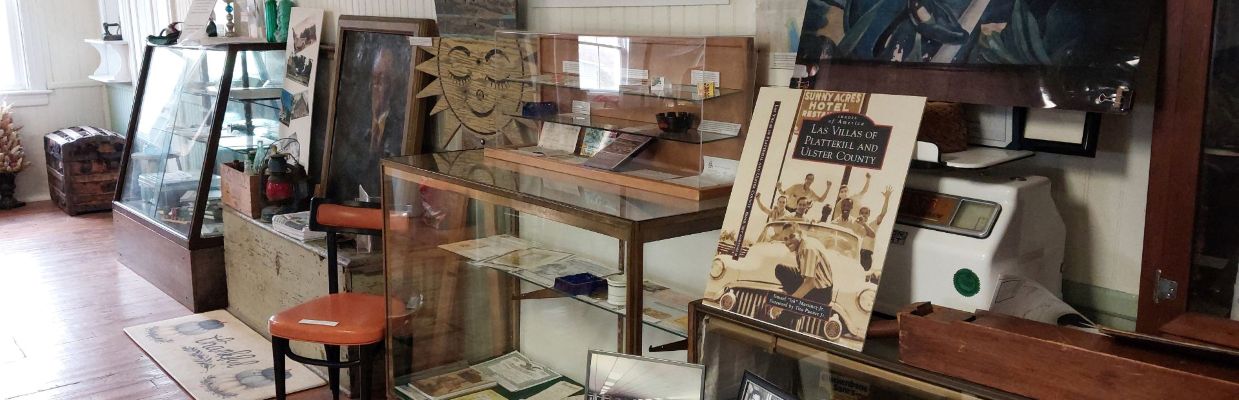
Recognizing the significance of Las Villas, individuals and organizations have worked hard to preserve and honor its history. One notable figure is Ismael “Ish” Martínez Jr., whose family ran the Sunny Acres villa during the 1950s and 1960s. He has played a crucial role with his book Las Villas of Plattekill and Ulster County, documenting this chapter of Puerto Rican-American life in words and images. His work to keep the memory alive has inspired other efforts to memorialize Las Villas through documentaries, exhibits, Facebook, and even a historical marker placed in Plattekill.
Though much of what was explored in this project is based primarily on the work of Ish Martinez through his book and interview, even he acknowledges that he doesn’t know it all. His perspective represents his own experiences growing up at Sunny Acres villa and working there in his youth. There are many stories and experiences left to uncover.
One area that deserves further exploration is Plattekill’s response to the influx of Hispanic migrants to the town. It's plausible that the Latino community in Plattekill faced challenges common to many immigrant groups, including discrimination and language barriers. For example, there were recorded instances of police being called on villa patrons, often due to confusion over rural property boundaries or unfamiliarity with the rural community’s customs. Cultural and racial tensions, and the logistics of managing a busy summer season in a small community, forced the town to increase the size of their police force. Interestingly Plattekill’s first Latino chief of police, Wilfrido Castillo Sr., was himself a Puerto Rican immigrant and a New York City transplant, illustrating that this era has left behind a complex and sometimes contradictory legacy.
This project is not the full picture; therefore, let this history spark your curiosity.

- Elisabet Guerrero-Hernandez, Marist '25
Recursos adicionales... Additional Resources
For more information, please visit:
Ismael “Ish” Martinez, Jr. (Author) – Las Villas of Plattekill and Ulster County
- Ish Martinez – Las Villas of Plattekill and Ulster County – the book’s Facebook page
- Las Villas of Plattekill and Ulster County – promotional video
Carla Martinez Ramos (Ish Martinez's sister) – Las Villas of Plattekill Facebook page
"NBC Visiones" Interview of Ish Martinez
Las Villas WAMC Podcast, A New York Minute in History
Hudson Valley Times Las Villas historic marker sign dedication article
- Las Villas Historic sign dedication clip 1
- Las Villas Historic sign dedication clip 2
Daily Freeman news article on Las Villas
- Daily Freeman news article photos
James D. Fernandez PhD, New York University author - Invisible Immigrants: Spaniards in US (1868-1945)
- Amazon
- James D. Fernandez article on Las Villas
- NBC News article from an interview with James Fernandez and Luis Argeo
- NBC News Visiones video on Las Villas with James Fernandez and Luis Argeo
Zoom presentation sponsored by Geoffrey Miller - former Ulster County Historian
Zoom presentation to Spanish students at Wallkill High School
Zoom presentation sponsored by Walkway Over the Hudson
Scenic Hudson article on Las Villas
Spanish Immigrants in the United States; ni frailes ni conquistadores
Plattekill (Images of America) by Elizabeth Werlau, Plattekill Town Historian